




Introduction: A Smarter Way to Handle Medical Waste
Medical waste is a growing global concern. From hospitals to clinics, the amount of waste produced every day continues to rise — and with it, the risks of poor handling: environmental damage, regulatory violations, and inefficient operations. Many systems still rely on fragmented data, paper-heavy processes, and reactive management.
That’s why Intrazero developed the Medical Waste Management Information System (MWMIS) — a digital ecosystem designed to modernize how medical waste is tracked, handled, and reported. The project also benefited from the support of the Egyptian Knowledge Bank (EKB), which provided valuable knowledge resources related to medical waste management and operational processes. This blog introduces Phase 1 of the platform, laying the groundwork for a transparent, secure, and fully compliant workflow. In our next blog, we’ll explore Phase 2, which focuses on waste tracking, treatment, monitoring, and reporting.
Phase 1: Building the Foundation — Administrative and Regulatory Control
1. Contracting Module: Simplifying Complex Agreements
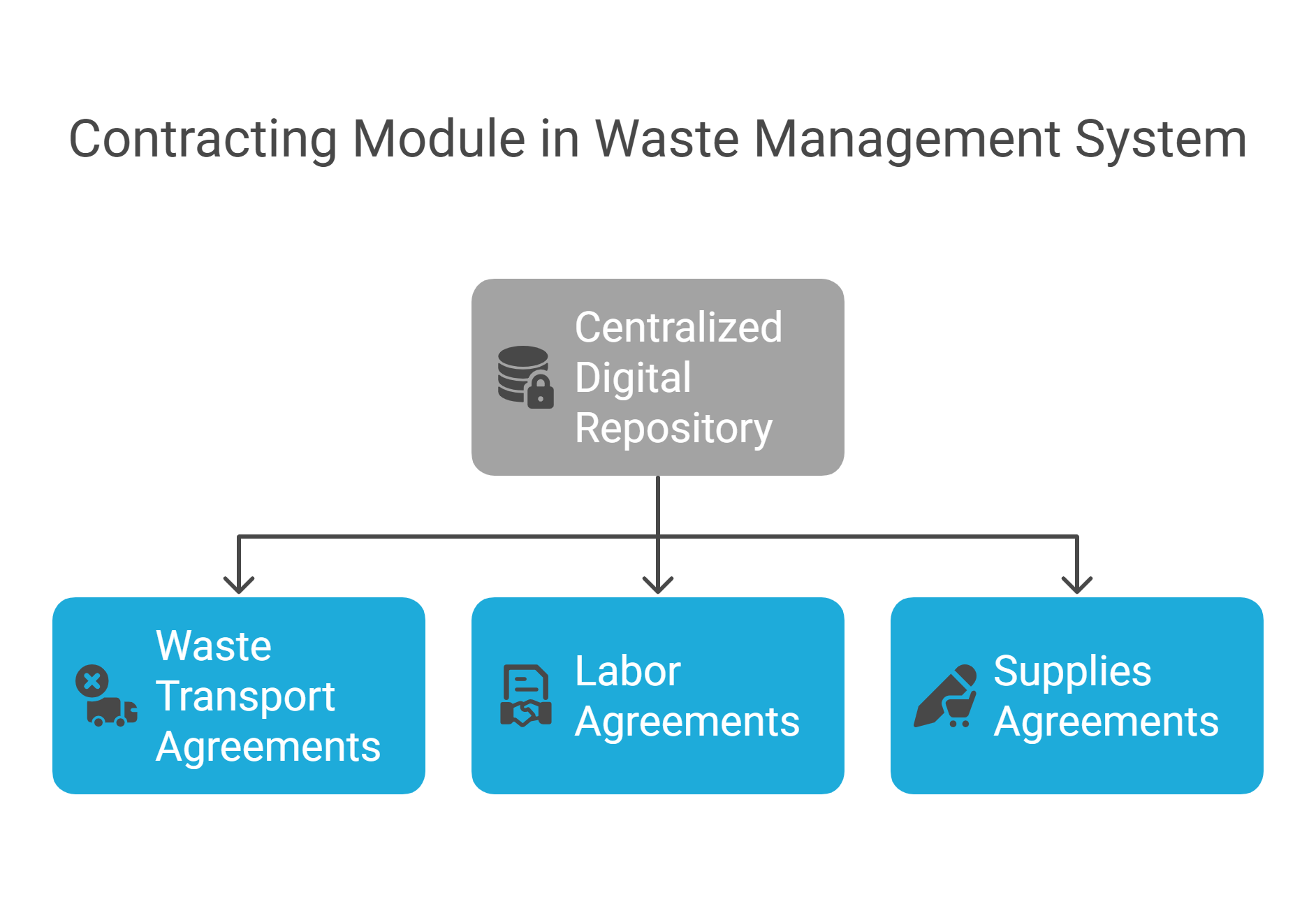
At the core of any waste management system is clear contracting. The Contracting Module brings all types of agreements — from waste transport to labor and supplies — into one centralized, digital repository.
- Standardized digital templates simplify contract creation, approval, and legal review.
- Automated notifications remind users of renewal dates and performance milestones.
- Secure digital archiving ensures access to version-controlled contract records.
- Stakeholder onboarding portal allows healthcare facilities and service providers to register and submit documents online, with instant account creation after approval.
- Lifecycle tracking lets users renew or terminate contracts with full documentation.
- Smart integration pulls data from the Asset Management Module to populate equipment and vehicle fields.
2. Licensing Module: Compliance Without the Complexity
Managing licenses can be time-consuming. The Licensing Module helps authorities and service providers stay on top of regulatory requirements — without the paperwork chaos.
- Digital license application portal supports all license types (waste handling, transport, technology approval, etc.).
- Adaptive checklists guide applicants based on license type.
- Multi-stage approvals with customizable workflows for ministries and committees.
- Renewals and amendments are managed within the platform.
- QR codes for on-site validation allow instant verification via mobile devices.
- Secure e-signatures from officials protect the authenticity of every document.
- Dynamic reporting tools offer oversight by region, license status, or date range.
3. Asset Management Module: See Everything, Manage Better
The final pillar of Phase 1 is asset control — covering the entire fleet and infrastructure required for proper waste handling.
Central registry of all assets, including:
- Treatment devices (incinerators, autoclaves) with operational data
- Vehicles with licensing and performance specs
- Processing complexes with GPS location and infrastructure details
- Storage facilities and equipment with compliance status and capacity logs
- Maintenance tracking with alerts for upcoming services and breakdowns
- Performance and consumption monitoring, including fuel, electricity, and environmental compliance
- GIS map dashboard showing real-time asset locations and operational status
Why It Matters
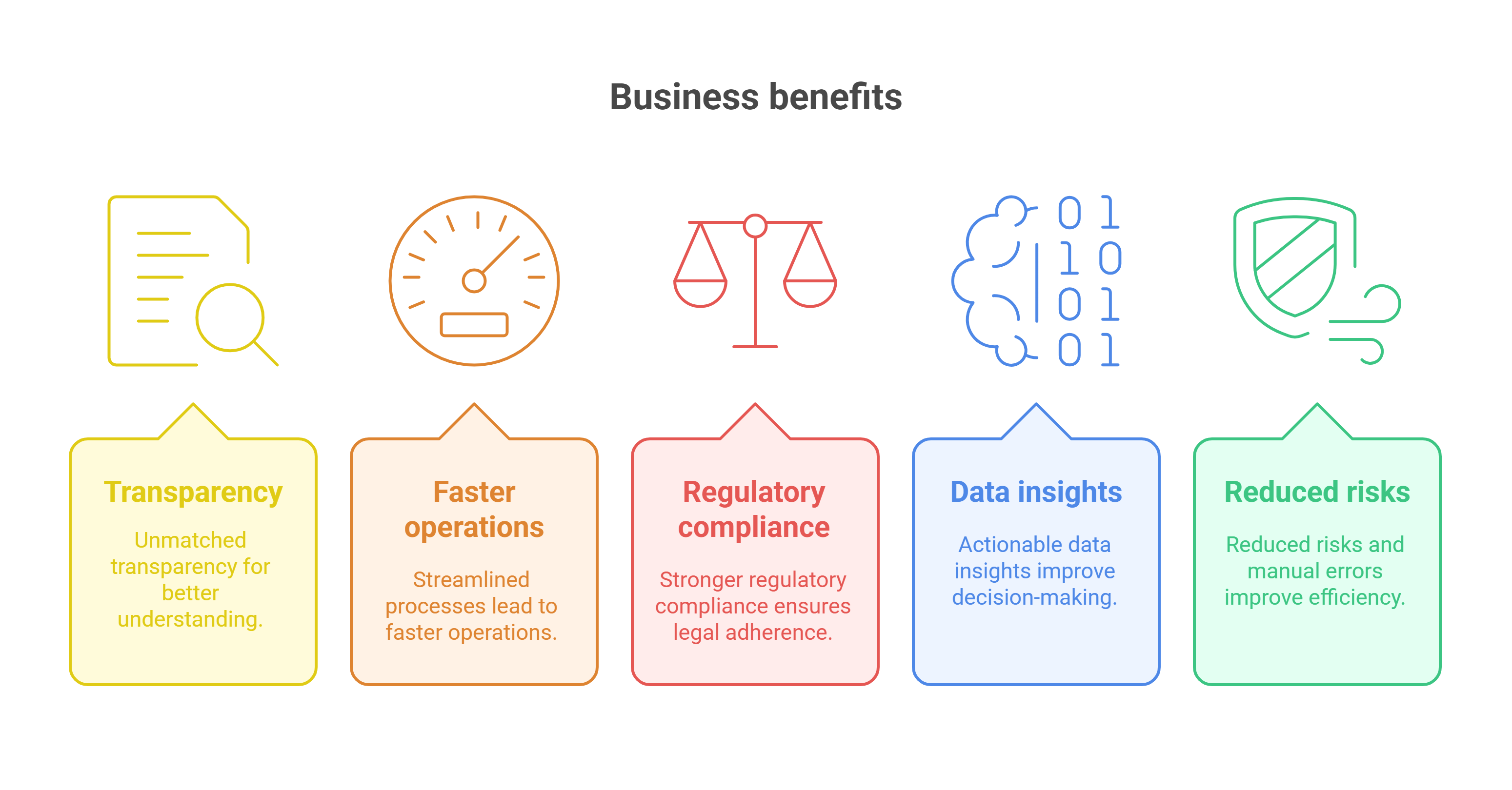
Phase 1 sets the stage for smarter medical waste governance. By digitizing contracts, licenses, and assets, organizations gain:
- Unmatched transparency
- Faster operations
- Stronger regulatory compliance
- Actionable data insights
- Reduced risks and manual errors
This isn’t just a software platform — it’s the beginning of a nationwide transformation in how medical waste is managed.
What’s Next?
Stay tuned for our next blog, where we’ll explore Phase 2 of MWMIS — including waste tracking, operational monitoring, treatment insights, and sustainability reporting.
Intrazero Editorial Team
EdTech & HealthTech Insights