




As the world navigates an era defined by rapid technological advancement and growing environmental consciousness, the management of medical waste has emerged as a critical factor for sustainable healthcare. Intrazero is proud to introduce its innovative Medical Waste Management Information System (MWMIS), a solution specifically designed to address the challenges and complexities of medical waste handling across healthcare facilities.
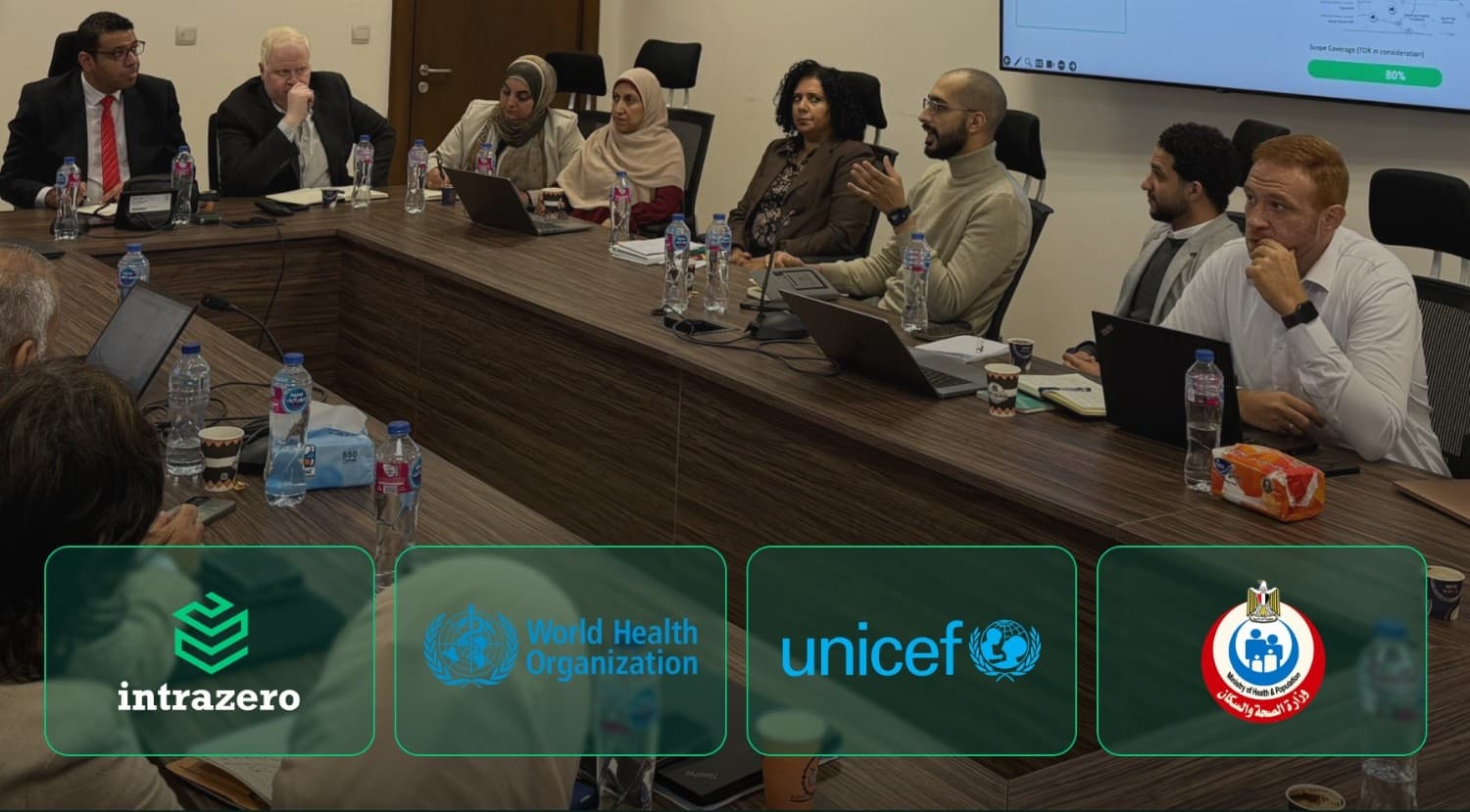
Recently, we had the opportunity to showcase MWMIS to esteemed representatives from the Ministry of Health and Prevention (MOHAP), UNICEF, and the World Health Organization (WHO). This collaborative session provided a platform for our team at Intrazero to demonstrate how MWMIS is redefining healthcare waste management to support safer environments for healthcare providers, waste handlers, and communities worldwide.
About MWMIS: A Holistic Approach to Medical Waste Management
At Intrazero, we believe in crafting solutions that transcend boundaries and bring impactful change. MWMIS embodies our mission by being a comprehensive digital platform that manages every stage of medical waste, from generation to disposal. Designed with the intricate needs of the healthcare sector in mind, MWMIS streamlines complex processes and ensures regulatory compliance through real-time tracking and data-driven insights.
Key Features of MWMIS:
- End-to-End Lifecycle Management: MWMIS covers every stage of the medical waste lifecycle, from waste generation and segregation to transportation and disposal. This seamless flow not only enhances operational efficiency but also helps mitigate risks.
- Real-Time Tracking and Analytics: With MWMIS, stakeholders can monitor waste activities in real time, make informed decisions, and address incidents swiftly, all while upholding high safety standards.
- Integration and Compliance: Using Domain-Driven Design (DDD), MWMIS is modular and compliant with both national and international standards, ensuring flexible integration with existing healthcare systems while maintaining strict regulatory adherence.
Objectives of the Presentation: Paving the Way for Safer Healthcare Practices
Our interactive presentation with MOHAP, UNICEF, and WHO was driven by several core objectives aligned with our mission to foster impactful progress in healthcare and environmental safety:
- To Position MWMIS as a Groundbreaking Tool: Introducing MWMIS as a technology that goes beyond simple waste tracking, aligning with global health and environmental standards.
- To Demonstrate Precise Waste Management Capabilities: We showcased how the system’s real-time tracking empowers stakeholders to monitor, track, and manage medical waste efficiently, ultimately reducing health risks and environmental impact.
- To Discuss the Broader Impact: Our presentation highlighted how MWMIS contributes to public health, regulatory compliance, and operational efficiency, ensuring a safer environment for all involved in medical waste management.
Why MWMIS? Bridging Technology with Intrazero’s Core Values
For Intrazero, innovation is more than a solution—it’s our purpose. MWMIS reflects our dedication to client-centered impact, delivering a platform that not only meets healthcare industry standards but exceeds them through modular flexibility and rigorous compliance features. Intrazero’s core value of empowering collaboration is also at the heart of MWMIS, a solution built on input from experts, practitioners, and institutions alike, including invaluable insights from partners like UNICEF and WHO.
Key Highlights of Our Session
Our meeting with representatives from MOHAP, UNICEF, and WHO offered the opportunity to explore how MWMIS is uniquely equipped to address the needs of today’s healthcare sector. We discussed what has been achieved and what to expect going into the next phase
Looking Forward: A Future of Collaborative Innovation in Medical Waste Management
During our discussions, we laid out a collaborative roadmap for MWMIS’s future. This partnership-driven frame of work allows Intrazero to incorporate stakeholder feedback, optimize system functionalities, and ensure that MWMIS meets the highest standards of usability, functionality, and impact.
The Road Ahead: Shaping a Safer, Healthier Tomorrow
Intrazero’s commitment to creating meaningful solutions for the healthcare sector is more than just a business goal—it’s a vision shaped by collaboration, innovation, and impact. We extend our deepest gratitude to MOHAP, UNICEF, and WHO for their invaluable insights and dedication to improving health and environmental standards. Together, we’re pushing the boundaries of medical waste management and setting a standard for responsible, efficient, and sustainable practices.
Stay tuned as we continue to share updates on MWMIS and work toward a future where healthcare waste is managed with integrity, safety, and sustainability.
Intrazero Editorial Team
EdTech & HealthTech Insights